

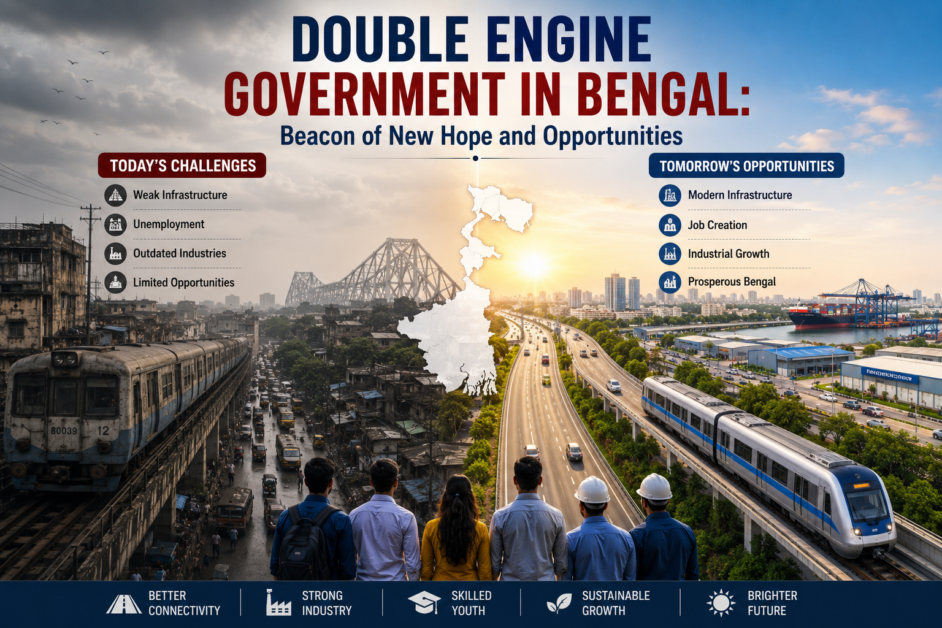
After independence, for the first time in the history of Bengal politics, people of Bengal thoroughly overlooked regional pride, language; and prioritized national importance and fundamental issues of their own state in the State Legislative Election of 2026. Resultant, Bhartiya Janata Party came in power in the Bengal politics with 207 seats out of 294. This state legislative election was one of the most controversial and most notable elections of the history where the battle was between the regional power TMC who was in power in Bengal for 15 years and national power BJP who was desperate to win in Bengal.
When it comes to election in Bengal, it not just another election, it is filled with a lot of perception, expectation, excitement and emotion; and also notorious for political violence, booth capturing, etc. Bengal election is not about, “who will win election in Bengal?”, rather question arises “who should win election in Bengal?” Unlike, previous Bengal election, the Bengal election 2026 was most controversial and filled with highly controversial political strategies like:
- Implementation of Special Intensive Revision (SIR) by the Election Commission of India (ECI) where over name of 90 lakh people deleted from voting list. The ECI framed this as routine “purification”.
- 30 observer and 294 micro observer deployed for SIR in the state that never happened in any other states.
- From 95% of all officer across India transferred in Bengal.
- Home Ministry deployed 480 companies of Paramilitary forces before assembly election to ensure violence free and peaceful election.
All these administrative steps by ECI and Ministry of Home Affairs pushed back the Trinamool Congress and their party workers who were engaged in poll violence and election malpractices. Consequently, people of West Bengal exercised their voting rights freely without any pressure wherein the state recorded 91.66% voter turnout in two-phase Assembly polls that was highest in the state since independence. This highest percentage of voting proved boon for Bhartiya Janta Party and they got landslide victory, toppled 15 years old Trinamool Congress. According to the data by the Election Commission of India, following are the vote share percentage of parties who fought the Bengal election in 2026
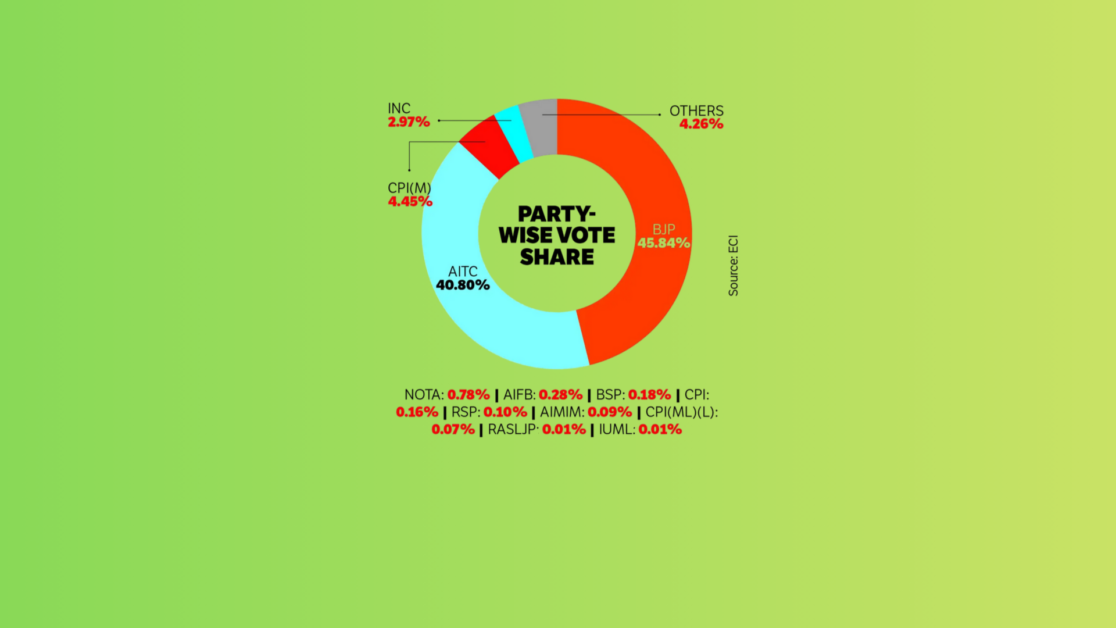
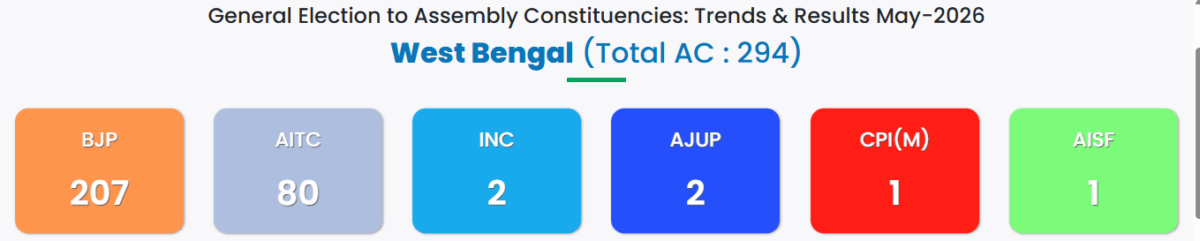
- In 2016 West Bengal legislative election, Bhartiya Janta Party (BJP) won 3 out of 294 total assembly seats, their vote sharing percentage was 10.16.
- In 2021 election, BJP won 77 out of 294 assembly seats, their vote sharing percentage was 38.14.
From 2016 to 2026, BJP’s journey in West Bengal is like, rise from obscurity to glory; where people trusted the party, their manifesto, promises, and the ideology. Today, BJP is more than a ruling party for Bengal where common people’s emotion and hope attached with them therefore, they have huge opportunity and responsibility to rejuvenate the Bengal and bring back the old glory and legacy of the state. Today, Bengal is facing multiple structural challenges including Industrial stagnation, governance concern, infrastructure deficiencies, healthcare deficiencies, Employment and Education. This post aims to shed light on these issues and examine whether this new government can create opportunities for long term revival and reform.
Industry Stagnation
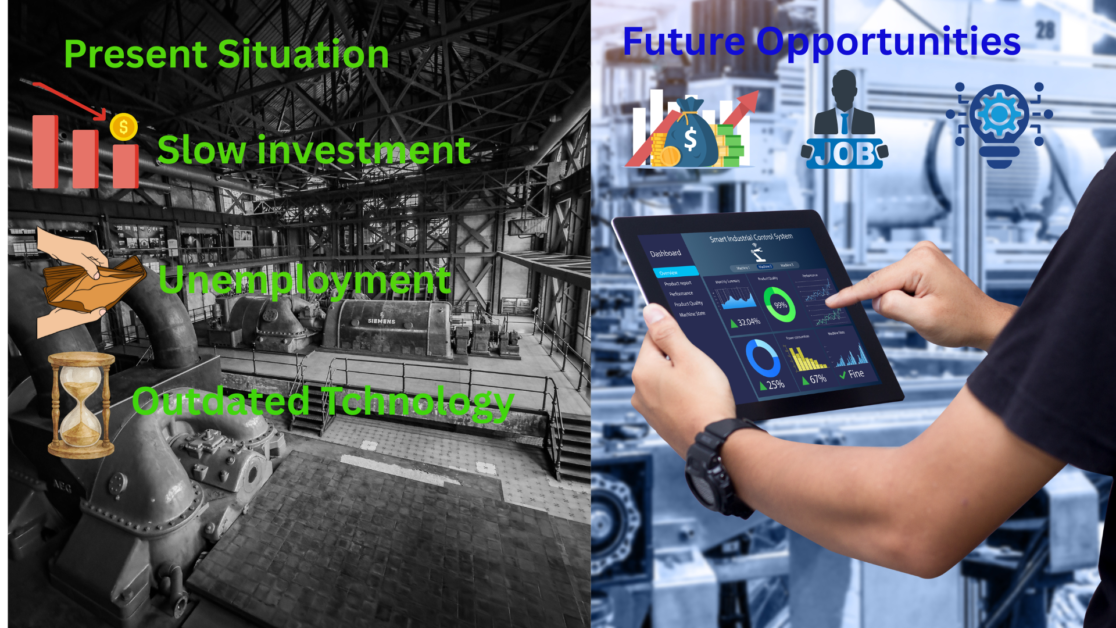
During the British colonial rule, the First Governor General of British East India Company, Robert Clive described Bengal as “the paradise of the earth”. Indeed, whether colonial era or pre-colonial era, from vast natural wealth, textile supremacy, to immense river networks proved significant for Britishers to shape global trade that eventually fueled the British Industrial Revolution. Even after independence, the state was industrial power house, contributing over 10% to the national GDP in 1960 after Mumbai and Chennai. But several factors including the Freight Equalization Policy, labour unrest, technological stagnation, economic liberalization, and industry policy shortcomings under Left Front Government and AITMC contributed to the gradual decline of the state’s industrial competitiveness.
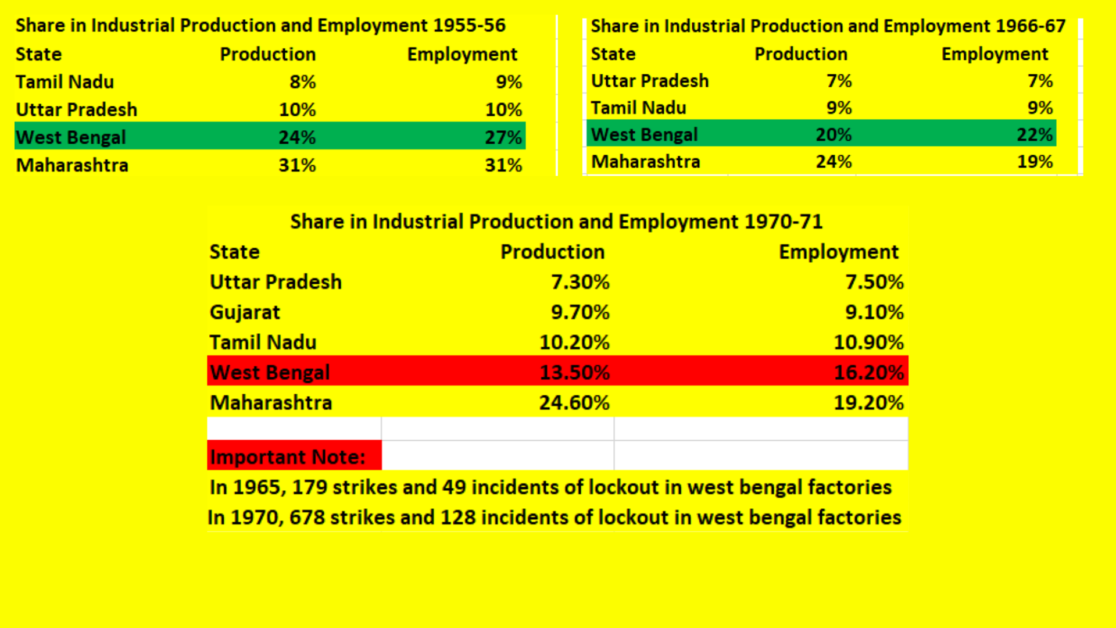
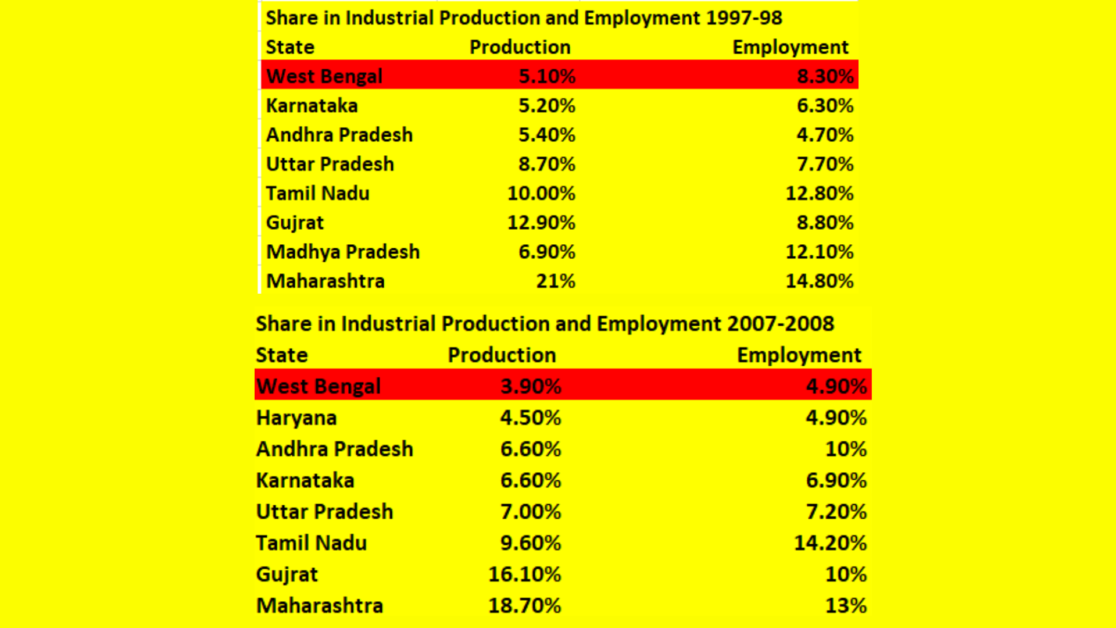
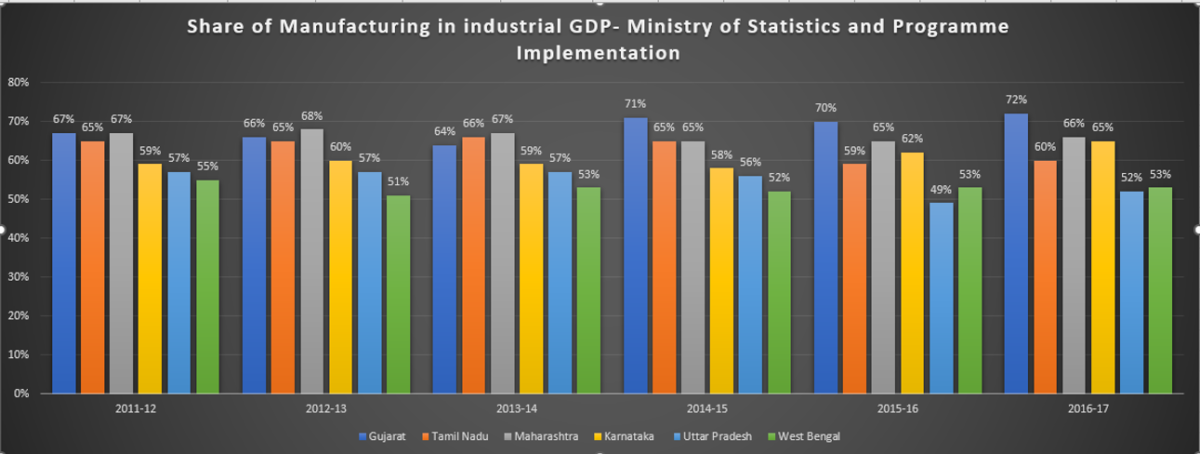
Significantly, implementation of Freight Equalization Policy in 1952 by the Government of India changed Bengal’s industrial landscape. This policy neutralized the transportation cost of essential minerals such as coal and iron ore across India, thereby significance of Bengal reduced who was once leveraging high freight of supplying iron ore and coal to other parts of the country. Consequently, several industries moved to western and southern India and established their manufacturing units. Thereby, gradually after 1977 West Bengal gradually lost its competitiveness in industry development, especially in the heavy manufacturing sector compared Gujarat, Maharashtra, and Tamil Nadu. Following data reflecting a sharp decline of West Bengal’s industry in the context of employment and production from 1955 to 2007 and the bar graph explains West Bengal’s performance in manufacturing industry.
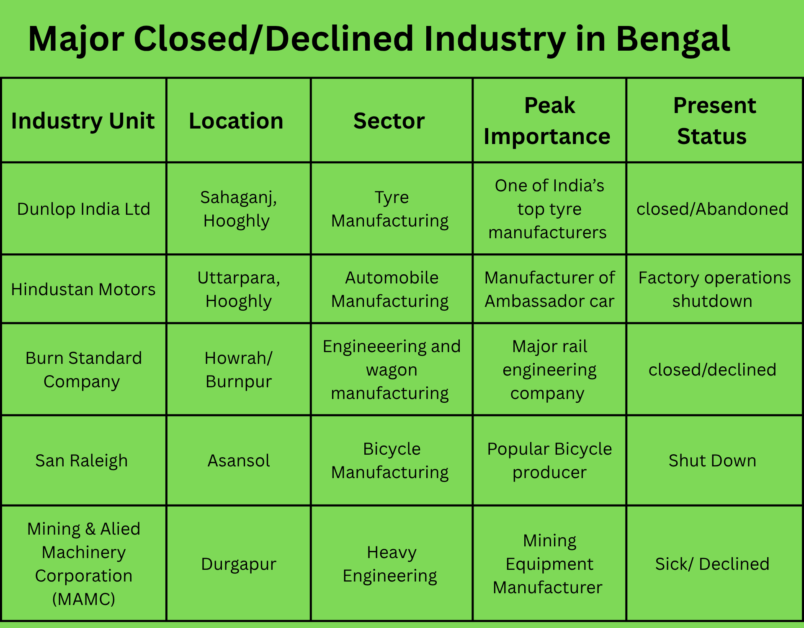
Today, historically important industrial units/industrial belts in the state such as Dunlop India Limited, Hindustan Motors, Burn Standard Company Limited, Hindustan Cables, Mining and Allied Machinery Corporation, Hindustan Fertilizer Corporation Limited, National Jute Mills units, Burn Standard Company Limited was once epitome of the state’s industrial growth. Today, many of these factories have been either closed, abandoned or underutilized permanently. This clearly reflects the state’s industrial stagnation. Definitely, after economic liberalization in 1990, many of these factories/ industries struggled to modernized, did not received political and administrative support, therefore as a result these industries have been closed, abandoned or underutilized permanently that lead to employment loss across several industrial belts. Sources:
- Public Enterprises & Industrial Reconstruction Department, Government of West Bengal
- Annual Survey of Industries (ASI)
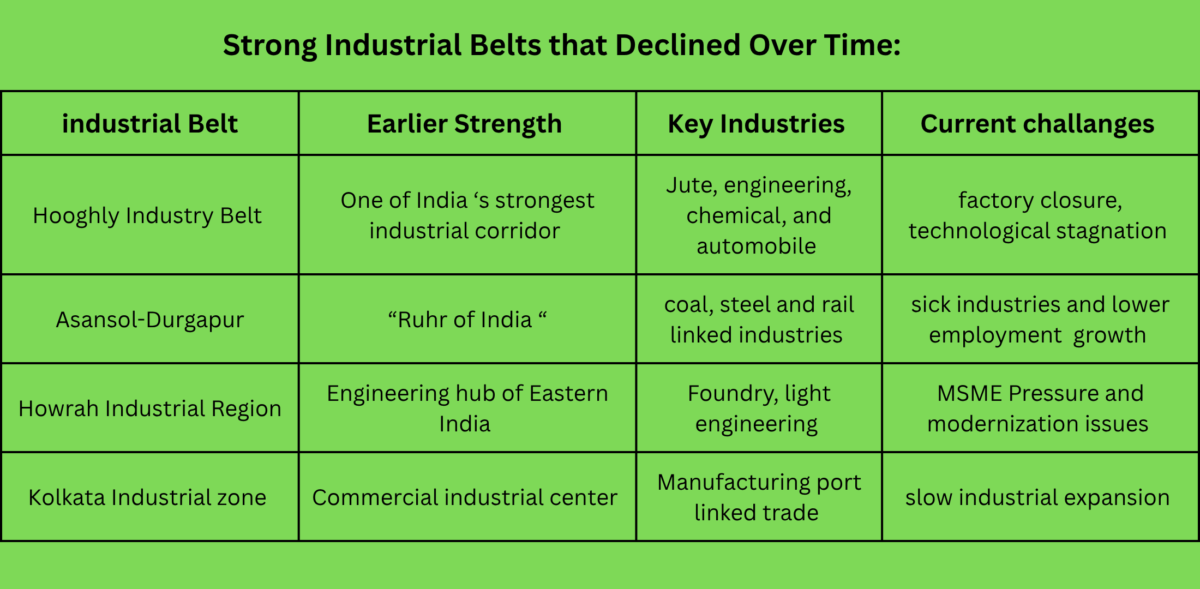
Strong Industrial Belts that Declined Over Time:
Hooghly Industrial belt:
Hooghly Industrial Belt was once famous for its jute, engineering, chemical, light manufacturing, and automobile industries. Due to diverse industrial units/ factories, the place was once India’s strongest industrial corridors. Today, many industrial units under this belt either shut down, became financially unviable, or experienced long-term decline.
Asansol–Durgapur Industrial Belt:
Asansol–Durgapur Industrial Belt was famous for its coal, steel and rail linked industries. Popularly, the belt was known as “Ruhr of India”. Today, many factories under this belt became sick, closed or capital intensive with reduced employment.
Possible revival of West Bengal’s industry:
In the era of globalization where trailblazing technology and progressive socio-economic landscape are deciding the fate of the state, then in this scenario, this present state government need to redefine the industrial culture from MSMEs, heavy machinery to computer science and information technology with futuristic technology and farsighted business solutions. Present West Bengal government has to ensure the industrial growth of the state in two parts. In first part, the government should revive the sick and permanently declined or abandoned industrial units. In second part, the government should focus on investing futuristic technology. Therefore, I have divided this possible revival plan in two parts. In first part, I will discuss on possible revival solution of old declined industrial units and in second part I will shed light on investing on futuristic technology.
1: Possible Revival of old declined or abandoned industrial units:
Mining and Allied Machinery Corporation (MAMC) in Durgapur:
Mining and Allied Machinery Corporation (MAMC) in Durgapur, Asansol Durgapur Belt, was once hub of heavy machinery has been permanently declined in 2002, due to financial collapse, technological obsolescence, and frequent clashes between trade unions and management. This manufacturing unit need to revive investing on underground mining equipment manufacturing, debt restructuring, and securing assured supply orders from major public sector undertaking. However, previous Left Front Government under the leadership of Buddhadev Bhattacharya tried to revive this industry but due to ownership dispute, massive capital requirement, and lack of assured supply order from public sector undertaking, the revival plan is in limbo.
Hindustan Motor in Uttarpara, Hooghly:
Hindustan Motor in Uttarpara, Hooghly, Hooghly industrial belt, was once hub of Automobile manufacturing, officially declined and suspended all operation on May 2014 due to high financial debts and sharp drop in demand for the iconic Ambassador cars. This manufacturing unit need to revive investing on Electrical Vehicle manufacturing and railway coach ecosystem. Similarly,
- Dunlop India Ltd need to revive investing on Automobile component hub and MSME cluster.
- Burn Standard Company need to revive investing on Rail engineering and heavy manufacturing.
- San Raleigh need to revive investing on Bicycle and light engineering cluster
2: Investing on Futuristic Technology:
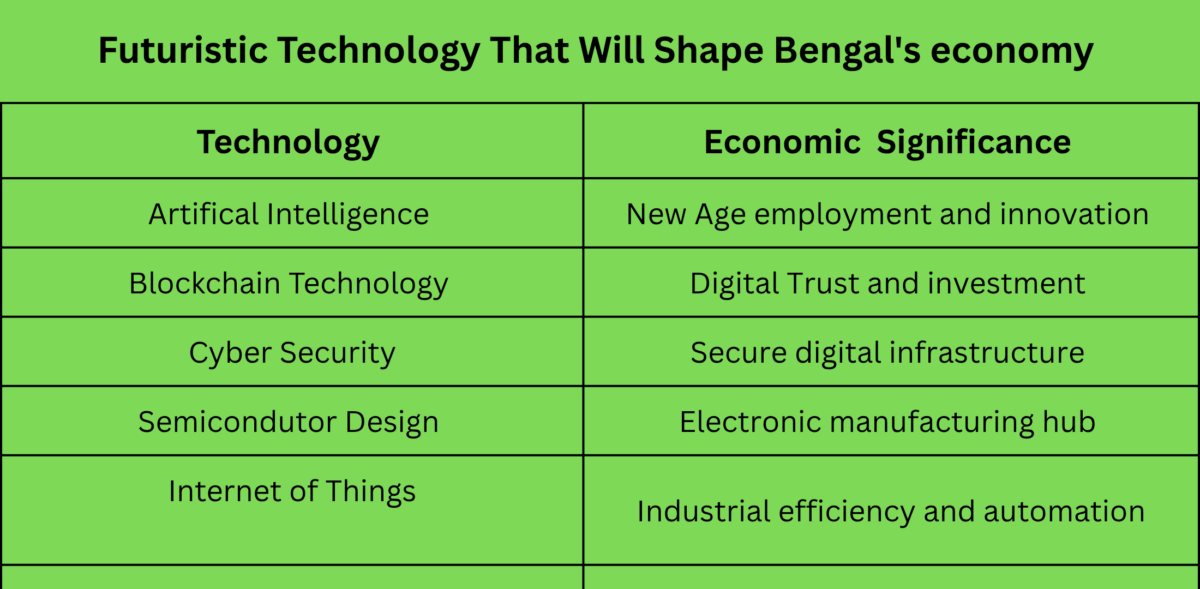
Today, West Bengal’s IT industry and digital infrastructure not only require significant improvement but also need to expand it beyond Kolkata in cities like Durgapur, Kalyani and Siliguri. In modern technology driven era, the present state government needs to do substantial investment in developing IT parks in futuristic technological areas such as Artificial Intelligence, Internet of Things, Blockchain Technology, Cyber Security, semiconductor design, and other state-of-the-art technologies. In addition, government should also focus on developing AI data centre and foster startup culture in areas like AI, Edtech and Fintech. Such investment will enhance state’s value in the sphere of IT, attract foreign investment, increase employment opportunities and prepare dexterous workforce for future.
Governance Concern
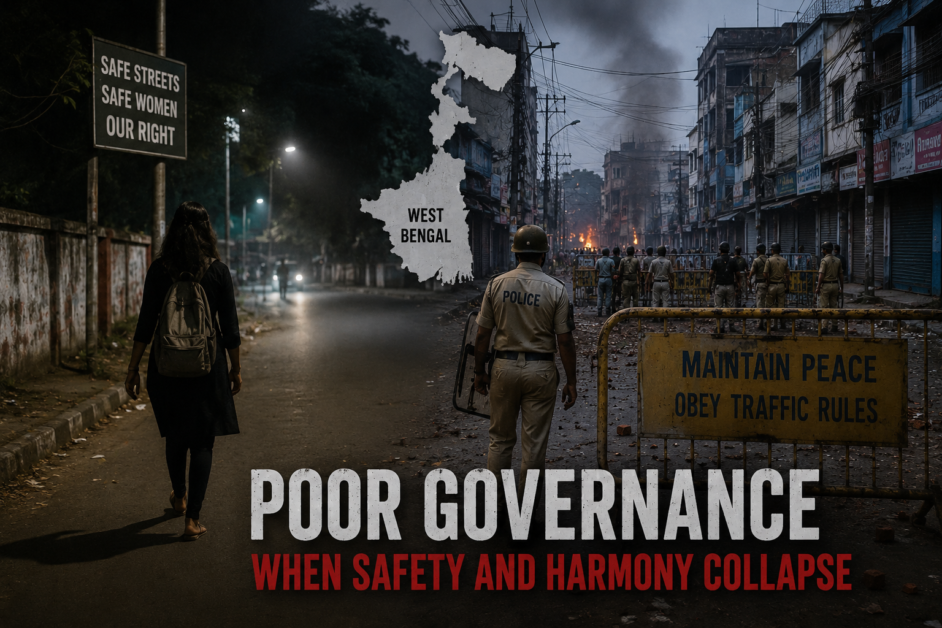
Over the last five years, the governance of West Bengal had been subject of criticism across the nation. Because from political violence, women’s safety concerns, corruption allegations, weak institutional accountability, to bureaucratic inefficiency; former TMC government failed to maintain governance in the state. The governance concern more deepened when people of West Bengal witnessed serious corruption, teacher recruitment irregularities and the RG Kar incident that sparked outrage across the nation. Apart from that, allegations of ‘syndicate raj,’ extortion, ration distribution scam and local-level corruption in rural areas, put serious question on TMC government’s governance, transparency, and administrative accountability. In addition, communal tension was continuously rising in the state where opposition parties raised serious question on administrative functioning of the TMC government, called for the resignation of former Chief Minister Mamata Banerjee and the imposition of President’s Rule in the state.
2026 assembly election in Bengal has changed the traditional political ecosystem of the state where Bhartiya Janta Party secured a comprehensive mandate and crossed the majority mark significantly. This assembly election result not only reflects transfer of power but also collapse of strong and long standing regio-political power. BJP’s victory is beacon of new hope and opportunity for the state; where there is hope of political and administrative renaissance; and opportunity of regaining academic excellence, industrial revival, cultural leadership and intellectual modernity. For years West Bengal’s relationship with the Central Government was marked as political and administrative conflict, since now the state has the “double engine government” thereby the government may accelerate infrastructure projects, industrial clearance, central welfare implementation, port and logistics modernization, and investment confidence. In this context, there are several governance reforms and developmental measures that the BJP can adopt to ensure effective administration and long-term growth. Below are some effective steps for stable and fair governance in the state.
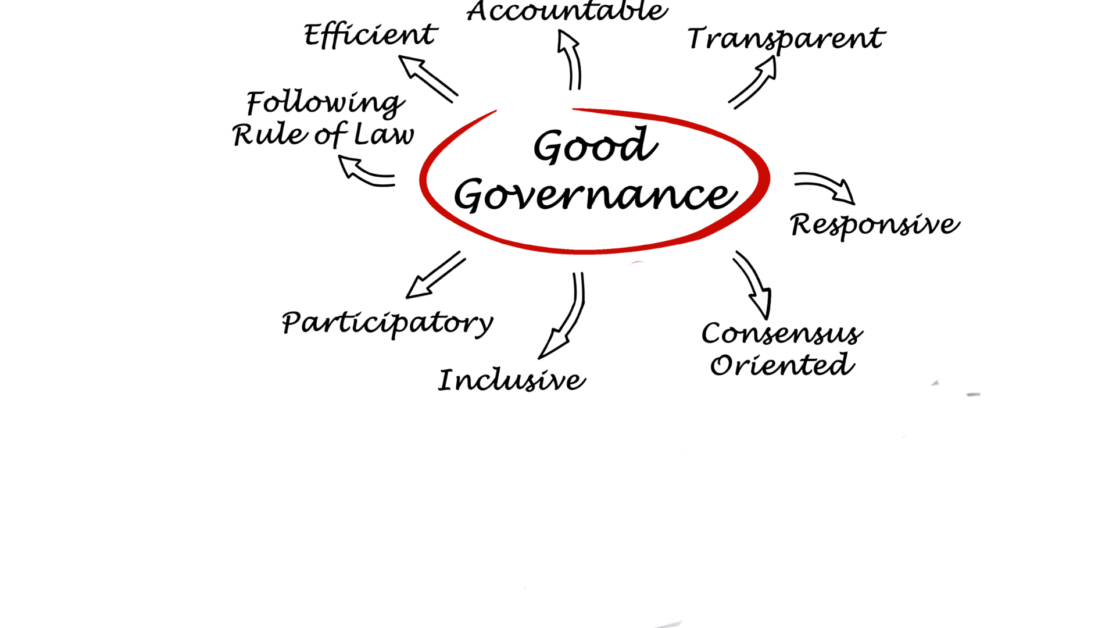
- The government should introduce blockchain-enabled governance mechanism in core areas such as public recruitment, public healthcare and welfare policies, and in administrative functioning to enhance transparency, minimise corruption, and strengthen institutional accountability.
- Implementation of fast-track courts, forensic infrastructure, and independent investigation agencies to strengthen law and order.
- Establishment of independent anti-corruption monitoring bodies to strengthen vigilance systems, ensure transparency in procurement, ration distribution, municipal governance, and public contracts.
- Implementation of stronger Right to Information Act, 2005 in the state to empower ordinary citizens and restore their trust in the public administration and governance.
- Investment in public libraries, research institutions, cultural centres, and AI education to rejuvenate the state’s traditional image as a centre of academic excellence.
Infrastructure Deficiency
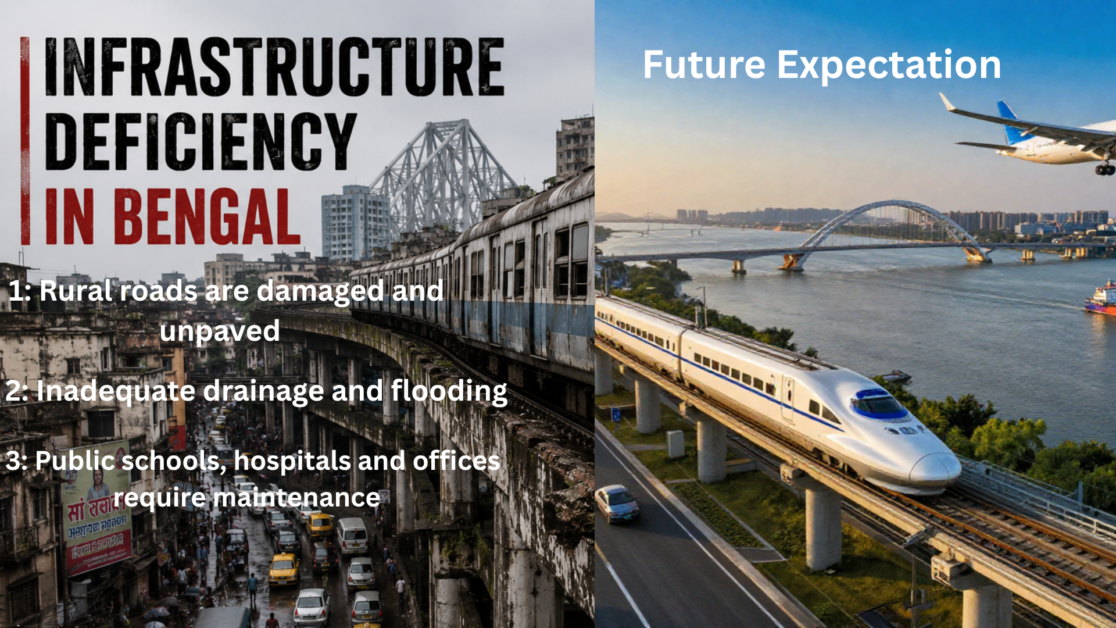
Infrastructure deficiency is one of the major issues in west Bengal that cannot overlooked in any serious discussion on the overall development of the state. Today, from rail, road, airways to water connectivity; Bengal is running on its decades-old infrastructure that reflects colonial era nostalgia and infrastructure underdevelopment. It will be not wrong to say, Bengal is trying to run modern economic development on old infrastructure. Rapid urbanization, influx of lower middle-class population from neighbourhood states, climate stress and uneven investment, weak governance execution, and polarization politics are some core reasons behinds the state’s infrastructure deficiencies.
During the 15 years TMC rule, the former Chief Minister of Bengal, Mamata Banerjee made several promises to transform the state’s infrastructure where her core focus was on building new roads and bridges, improving urban transport, strengthening district-level connectivity across the state, metro expansion in Kolkata, logistics and warehousing hubs, stronger rural roads, and faster progress on port-led development project such as Tajpur wherein many are still in progress and some projects have been halted due to polarization politics issue and weak governance execution. Today, West Bengal is facing several structural gaps in infrastructure development wherein some core gaps in infrastructure are:
- Insufficient power and electricity infrastructure in key economic zone areas.
- Uneven availability of industrial lands and delays in creating large, ready investment zones.
- Loopholes in existing logistic ecosystem wherein gap in freight movement and poor coordination between road, rail and industrial hubs.
- Big gap in drainage system, sewage treatment, solid waste management and water supply network in Kolkata and its suburb areas.
- Delay in metro expansion and the late running frequency of local and metro rail operation.
- Inconsistent maintenance of road and bridges.
Possible Solution to West Bengal’s Infrastructure Challenge:
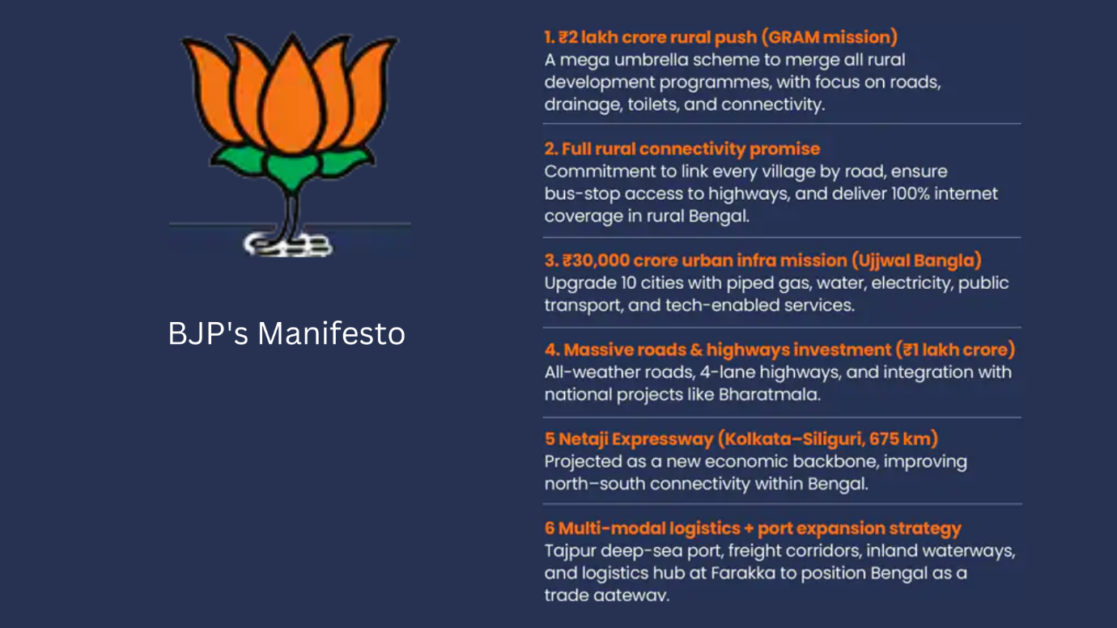
In 2026 West Bengal manifesto, the Bhartiya Janata Party had highlighted a series of infrastructure centric promises, ranging from ports, highways to regional connectivity. Since now the party got sweeping victory, so now they have to move from manifesto framing to implementation mode that requires a comprehensive and long-term development strategy, investment, political and administrative will power. Below are some possible solutions to the state’s possible infrastructure challenges.
- Expansion and development of modern electricity infrastructure in economic zone of the state.
- Implementation of transparent and efficient land acquisition policies to facilitate industrial development while avoiding socio-political conflicts similar to Singur and Nandigram.
- Focus on the development of modern drainage systems, sewage treatment plants, and improved water supply networks in Kolkata and its suburb areas.
- Adoption of GIS-based infrastructure planning and AI-driven traffic management systems in major urban centres.
- Faster completion of pending metro rail projects and increase running frequency of metro and local trains.
- Regular maintenance and safety audit of bridges, roads and flyovers to avoid any calamities.
- Public private partnership for infrastructure financing and project execution.
- Digital governance and transparent project monitoring systems to reduce delays and corruption.
Healthcare Deficiency
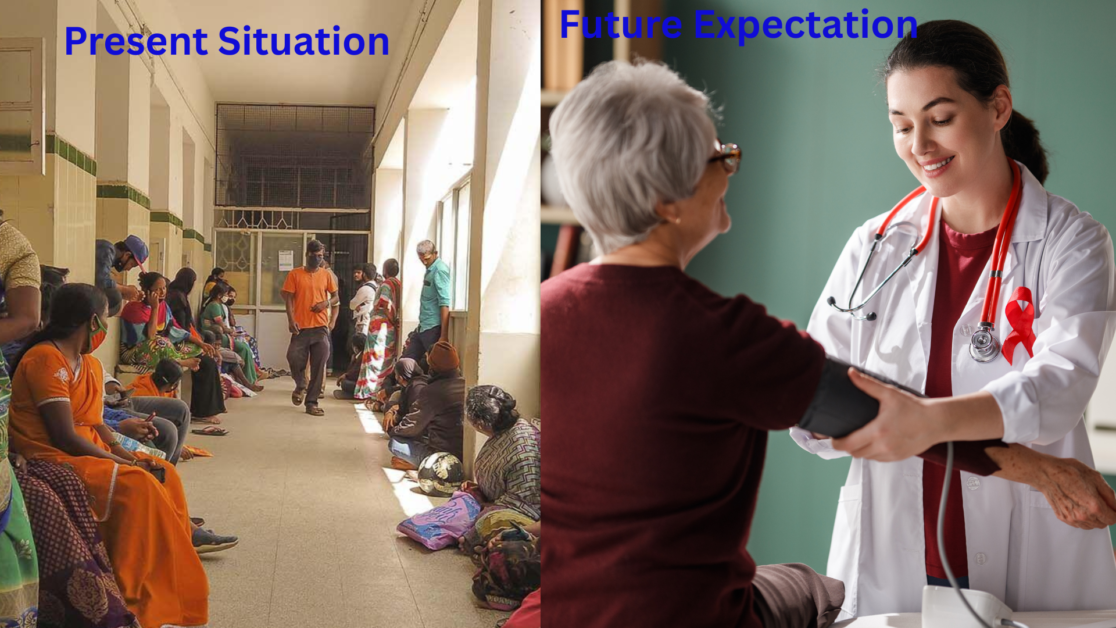
Public school and public healthcare are two sectors that reflect government’s ground work and commitment toward social development. The Public healthcare sector in India is going through crisis where limited ground work has been done to transform the system effectively. India’s spending on public healthcare sector remains around is 1-2% of total GDP which is abysmally low, compare to neighbouring countries like China- spends around 7% and Sri Lanka- spends around 3-4% of its GDP on healthcare. Notable thing is, Post Covid-19, Union government’s expenditure on public healthcare has declined from 0.37% in 2020–21 to 0.29% in 2025–26. It seems, Union government is more focused on development of private healthcare sectors where common people cannot afford medical expense. Below infographics clearly depicts the state’s healthcare deficiency
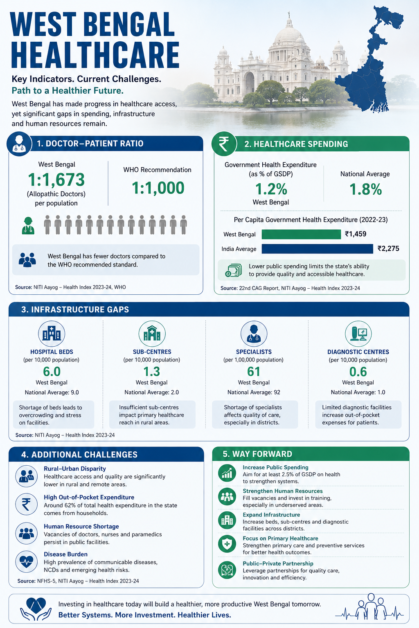
The condition of public healthcare in West Bengal is not different from the country as a whole. Overcrowded public hospitals, shortage of doctors and nurses, rising maternal deaths, security of doctors, repeated allegations of medical negligence, fake and substandard medicines and ground level corruption are gradually hollowing the public healthcare system. Condition in rural areas is seriously critical where government medical facilities are functioning from rented buildings wherein shortage of surgeons, paediatrician, and gynaecologists. Independent reports reveal that from 2018-2020 the state’s Maternal Mortality Ratio increased from 94 to 109 deaths per 100,000 live.
Under the rule of TMC, Former CM of West Bengal, Mamata Banerjee made several plans, policies and promises to revive the healthcare sector of the state, but her several plans and promises only expanded to papers. During her 15 years of governance, several government hospitals are reeling with inadequate manpower, common man don’t have equal regional healthcare access, and repeated cases of negligence that have eroded public trust in the system. Today, there are several problems in West Bengal’s public healthcare system, which are mentioned below.
- Severe shortage of qualified healthcare staffs such as specialist doctors, nurses, and paramedical staffs in rural and semi-urban districts, forcing patients to depend on overcrowded public hospitals in Kolkata.
- Excessive patient load, long waiting hours, bed shortages, and poor patient management in major government hospitals such as Seth Sukhlal Karnani Memorial Hospital and College (S.S.K.M.) and Nil Ratan Sircar Medical College and Hospital (N.R.S.).
- Wrong treatment, delayed emergency response, expired saline use, and inadequate monitoring have raised serious questions regarding accountability and functioning of public hospitals.
- Severe crisis of healthcare infrastructure such as ICU facilities, diagnostic equipment, ambulances, and specialist treatment in rural areas of West Bengal.
- Political interference and influence, muscle power, corruption in staff recruitment are weakening the efficiency of the public healthcare institutions that is reducing the public trust in the system.
- No security for doctors in the public hospitals in case of volatile emotional environments, violence, and harassment.
Possible solution to revive West Bengal’s healthcare deficiency:
Today, Bengal’s healthcare system is one of the most sensitive and politically significant sectors where one side is dominated by power politics and muscle power while the other reflects deficient infrastructure and substandard medical services. Indeed, the sector is burned with deep structural challenges where question is not just “how to revive the healthcare sector?” Rather question arises, “how to restore people’s trust, administrative transparency, and ethical governance within the system?” Since, West Bengal has entered in a new political era where the government has to focus on core problems in the system such as fake and substandard medicines, fake doctor and unlicensed practise, Swasthya Sathi Fraud Scandal, low quality supplies and procurement irregularities, etc.
Fake and Substandard Medicines:
The circulation of fake and substandard medicines across public healthcare system in West Bengal is rising continuously, this reflects weak administration and their serious negligence towards public health. Such medicines not only reduce effectiveness of the treatment but also life threatening to patients. Expired saline, counterfeit drugs, and irregular procurement practices have eroded public trust in the public healthcare system.
Possible Solutions:
- Implementation of Blockchain-based medical tracking system.
- Regular audit of hospital procurement and supply chain.
- Strengthening the drug state laboratories of the state.
Fake Doctors and Unlicensed Practice:
In Bengal’s rural and semi-urban areas, the proliferation of fake doctors and unlicensed practices is a critical issue driven by the severe shortage of qualified medical professionals, that reflects deep regulatory failure. Due to the shortages of quality healthcare access patients are getting wrong treatment, even in some cases they are losing their life.
Possible Solutions:
- Quality healthcare expansion in rural areas of the state.
- Creating public awareness campaigns in identifying fake doctors
- Establish strict verification system for medical licenses and registration.
Swasthya Sathi Fraud Scandal:
West Bengal Government’s paperless and cashless health insurance scheme came under a major controversy when reports of fake hospital claims, inflated medical bills, and misuse of beneficiaries were reported. Such irregularities reflect weak governance, burden public finance, and reduces the credibility of public welfare schemes.
Possible Solutions:
- Government need to introduce AI-based fraud detection systems, Aadhaar-linked real-time digital verification, and Blockchain-based medical claim tracking.
- Independent healthcare insurance audits and public transparency dashboards.
Low Quality Supplies and Procurement Irregularities:
Low quality medical supplies, substandard medicines, and corruption in tender allocation are reducing the efficiency and credibility of public hospitals in West Bengal. Such irregularities and weak procurement monitoring are waste of public resources and affects treatment quality in overstretched government hospitals.
Possible Solutions:
- Need to implement transparent e-procurement systems in healthcare administration.
- Solidifying independent quality-control inspections of medical supplies.
- Third-party auditing mechanisms for healthcare procurement.
Education
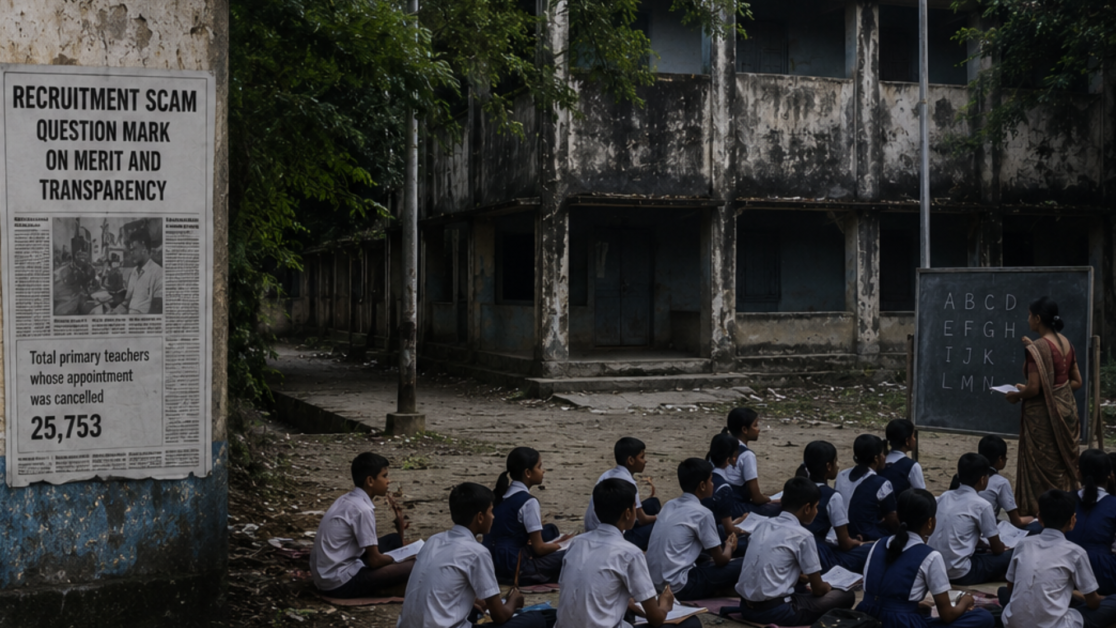
West Bengal was once highly acclaimed for academic excellence and progressive learning known for producing renowned economists, scientists, writers, and mathematicians. However, fifteen years rules of TMC government have weakened the ecosystem of government school education in the state. Under the leadership of AITMC supremo, Mamata Banerjee, the state government implemented some social welfare schemes such as Kanyashree, Sabuj Sathi, Shikshashree, Shishu Aloy to promote and strengthen school education while these welfare initiatives contributed to improve enrolment and educational access in several areas, but due to ground level corruption, administrative inefficiency and weak policy implementation; such welfare schemes proved insufficient to deliver desired outcomes. Today, West Bengal’s Government school education system is going through following challenges.
Shut Down of Government Schools:
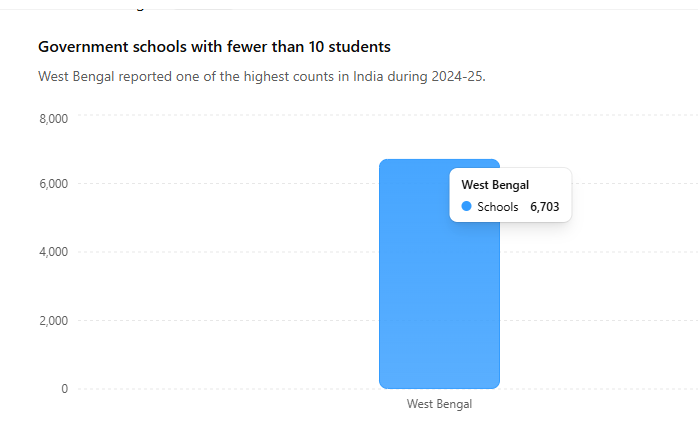
From the last ten years, the state’s primary education is going through severe crisis wherein 7,018 schools have been shut down. The state’s South 24 Pargana District has recorded maximum number of school decline, which is around 1200. In addition, Purulia, Bankura, Jhargram and West Midnapore are some districts where maximum closure of government schools has been recorded. Significantly, as per the Unified District Information System for Education (UDISE) West Bengal is the only state in India where 6,703 government schools are functioning with less than 10 students.
Student Dropout:
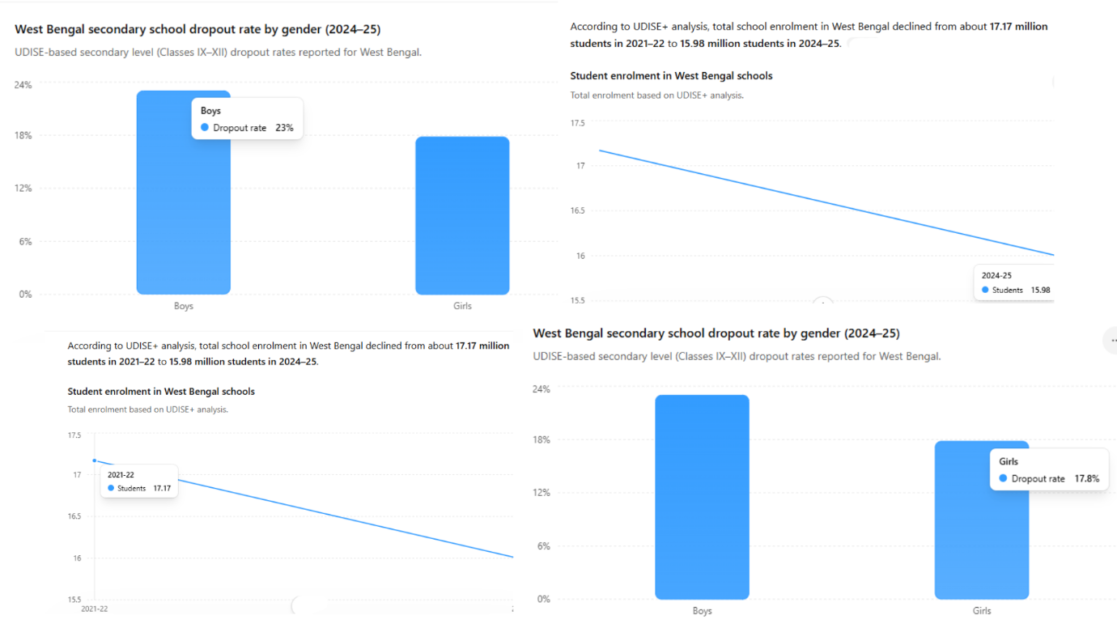
In the state, students are leaving their school education in the middle, this trend is rising at higher secondary level. According to the report by the Unified District Information System for Education (UDISE), total school enrolment in West Bengal declined from about 17.17 million students in 2021 to 15.98 million students in 2024-25. Significantly, according to the UDISE, school dropout ratio of boys is higher than girls at secondary level (class 9-class 12) wherein 23% boys and 17% girls left their school in the middle.
As per the independent report in 2023, total 3,20,000 female students passed the high school (class 10th) but only 2,77,000 of them have enrolled for the higher secondary exam in 2025. In male students this school dropout percentage is increasing at an alarming rate, from 2022 to 2025, 30% male students left their school education after passing high school. While many male students left their school and migrated to southern states for livelihood opportunities, a significant number of female students left their schools due to early marriage and work pressure.
Not enough number of teachers:
According to the Right to Education 2009, the students to teacher ratio should be 30:1. In Bengal, once the ratio was 35:1 in 2008. However, due to shortage of teachers this ratio is now 70:1. In district like Jhargram, Bakura, some of schools have shut down their science department due to lack of availability of teachers. The teacher recruitment process is also very uneven, irregular and slow in the state. In 2025, while government of West Bengal announced 13,421 vacancies for primary teachers (Class I–V) and 35,726 vacancies for secondary and higher secondary schools, this indicates widening recruitment gap within the education sector.
Corruption in education sector:
During the fifteen years of All India Trinamool Congress rule, Chief Minister Mamata Banerjee struggled to bring transparency and accountability to the education sector. West Bengal School Service Commission Recruitment Scam was one of her biggest governance failures where her minister Partha Chaterjee found main accused in manipulated OMR sheets, illegal appointments, bribery, and recruitment beyond sanctioned vacancies.
What BJP Government Must Prioritize to Restore Public Trust in Education Sector?
Today, the state’s education sector is facing structural challenges where corruption, slow and sluggish administration is ruining state’s legacy of academic excellence and intellectual leadership. Here, present BJP government has to think beyond welfare schemes and focus on long term structural reforms such as:
- Transparency and credibility in recruitment process through independent recruitment bodies, digital verification systems, and time-bound examinations, declaration of results and recruitment process.
- Biometric attendance of student, teachers and staff should be compulsory that ensures strict accountability withing the system.
- Focusing on establishment of modern infrastructure in school campus such as digital class rooms, library and laboratory.
- Introducing vocational course like digital marketing, web development, data analysis, software development, foreign language course in higher secondary classes to make students employable in the field of IT, digital marketing, etc. Here just commencing course will not work, rather need to hire qualified teaching faculties who have solid knowledge in their domain and ned to pay them a competitive salary.
- Strict action against corruption, political interference, fake certificates, and recruitment irregularities is necessary to rebuild public trust.
Employment Crisis
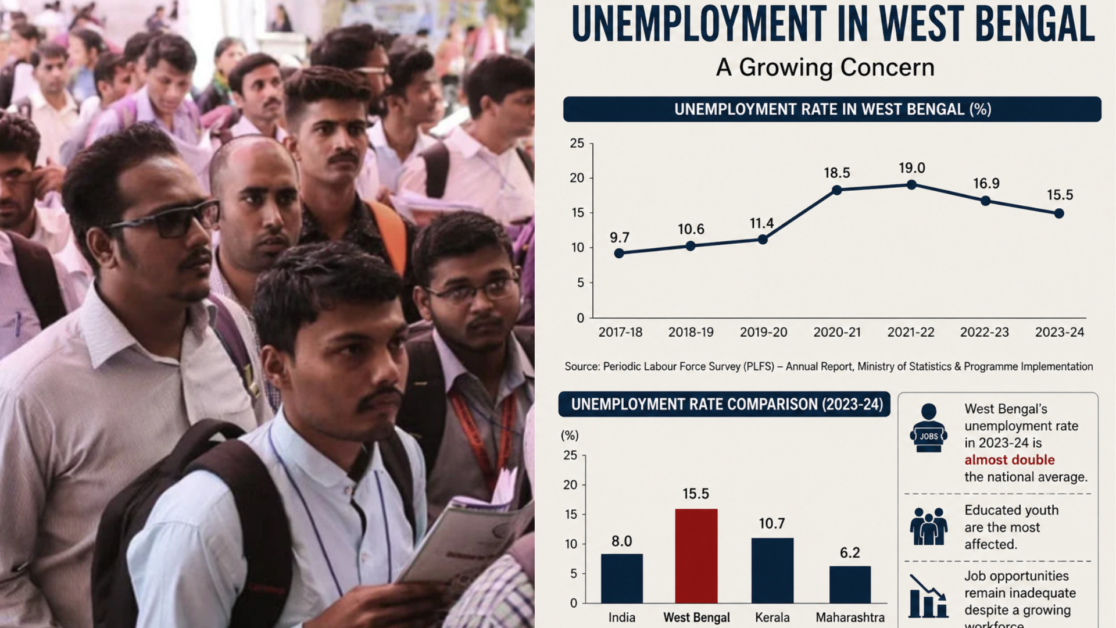
Today, West Bengal’s one of the most pressing socio-economic challenges are unemployment and youth migration. As per the report by the Times of India (outbound link), West Bengal ranks fourth among states from where people migrate for the livelihood. As per the report by the census in 2011, between 2001 to 2011, nearly 5.8 lakh people from Bengal migrated to other states for the work and employment and the trend is continuously rising.
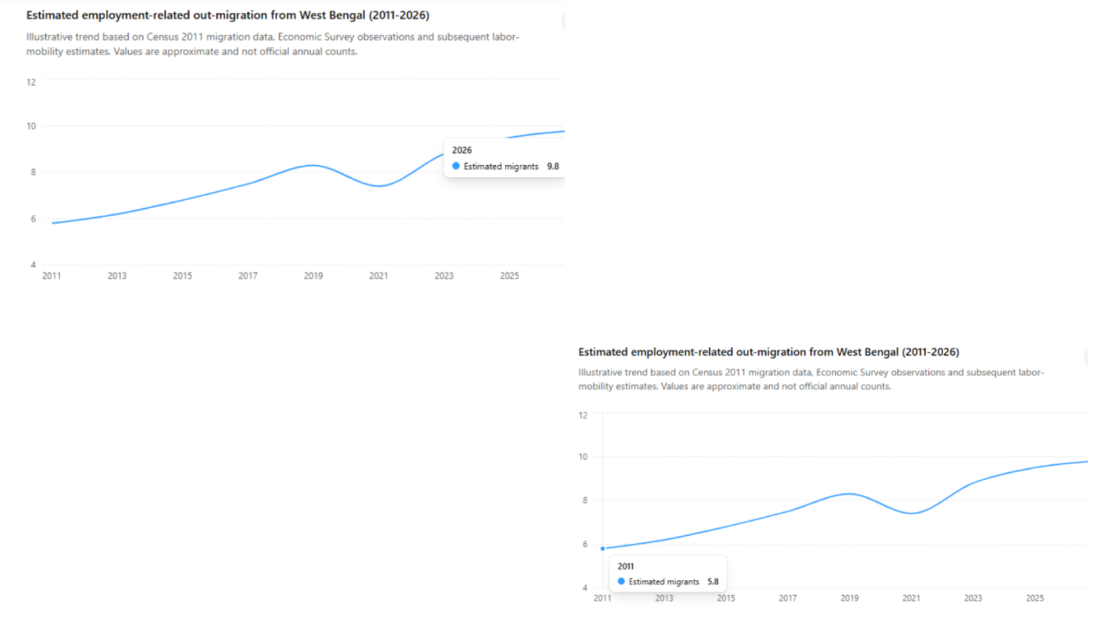
During the rule of Left Front Government and All India Trinamool Congress, the state could not achieve expected industrial growth compare to Maharashtra, Gujarat, Tamil Nadu, and Karnataka. Previous state government’s poor industry expansion policy, shrinking manufacturing opportunities, inadequate skill-based employment generation and corruption have weakened public trust in the employment system.
Possible Solution to Generate Employment in West Bengal:
- Government must focus on gaining investor’s trust through transparent governance, faster land acquisition policies, bureaucratic efficiency, strong structural law and order mechanism for industries.
- Revival and expansion of labour-intensive sectors such as manufacturing, textiles, leather, food processing, logistics, etc.
- Government must invest on vocational education, digital skills, AI-based training, encourage and support industry academia collaboration.
- Transparent public recruitment system, strong startup culture, and rural entrepreneurship programmes are today’s need in the state to reduce migration and rebuild strong economic confidence among Bengal’s youth.
Conclusion
BJP’s remarkable victory in Bengal is indeed an unprecedented moment for the party that symbolizes party’s political dominance across the nation. But this humongous victory also fetches big responsibilities of fulfilling people’s expectations of industry revival, employment generation, reduction in political violence, administrative neutrality, infrastructure expansion and cultural rejuvenation. And most important, democratic renaissance, where common man can trust on the governance and get social security.
Bengal is the land of cultural and intellectual renaissance that produced bewildering talents empowered country’s identity globally where only electoral dominance will not work, rather how this “Double Engine Government” deeply changes lives combining strong administration, institutional fairness, economic revival and social harmony; will decide the fate of the Bengal and may the state rediscover its Academic excellence, Industrial pride, Cultural leadership and Intellectual modernity.